Mental Health Matters: Noticing The Signs

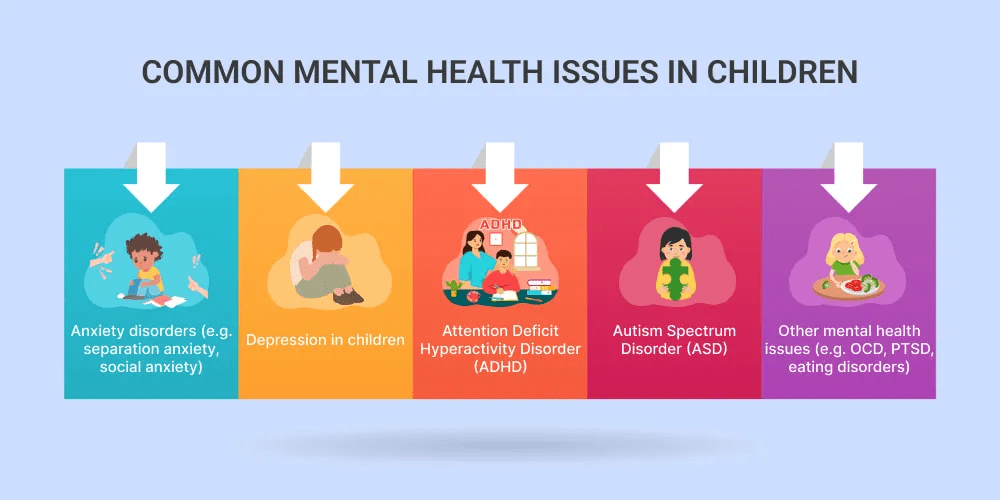
When we support children with disabilities, it’s not always easy to recognise when something isn’t quite right. Every child communicates differently, and distress and anxiety doesn’t always look the way we expect it to.

But it helps to remember that: every change matters. Every small difference like; shifts in behaviour, mood, connection, or physical wellbeing are worth noticing with curiosity and care.

You might see:

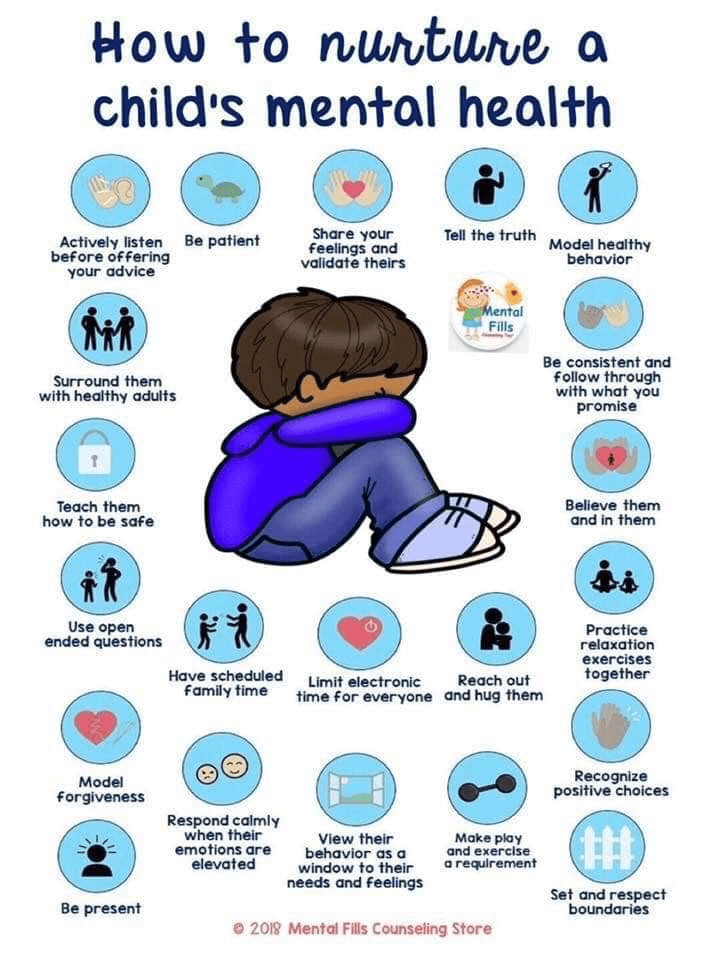
  • changes in mood or behaviour (more withdrawn, irritable, or losing interest in things they used to enjoy)
  • becoming overwhelmed more easily or finding it harder to cope with stress
  • changes in sleep or eating
  • more physical complaints like headaches or tummy aches
  • pulling away from people or activities
  • increased anxiety, worry, or fear
  • expressions of distress or hopelessness (in whatever way your child communicates)

For some children, especially those who are non-speaking, these signs can be subtle and show up through behaviour rather than words. If something feels different, or your gut is telling you something has shifted, respond to that quickly. You know your child best, and noticing these small changes is an important first step in helping them feel safe, understood, and supported.

The first step truly isn’t about having all the answers: it’s simply reaching out.

You might consider:

  • having a gentle conversation with your child’s school or teacher to share what you’ve noticed and see what they’re observing
  • connecting with your child’s allied health team (such as their psychologist, speech pathologist, positive behaviour practitioner or occupational therapist)
  • speaking with your child’s paediatrician or GP to explore what might be going on
  • keeping track of changes over time, so you can build a clearer picture of patterns or triggers

Often, it’s the shared understanding across home, school, and supports that helps things make more sense. It also shares the burden, so you don’t have to do it all on your own. Support is there to help you piece things together and find a way forward that feels right for your child. And just as importantly, be gentle with yourself in this process. You don’t have to have all the answers: noticing, wondering, and reaching out are all meaningful steps.
Carer Burnout – February Musings

It is probably an opportune time to talk about the very real ongoing pressures that carers and families face every day.

There is a relentlessness of daily routines, therapies, school refusals, health practitioner refusals and ongoing meltdowns. Let’s face it, not many in the everyday community have any idea what a day looks like for many who care for anyone with complex needs. They might have empathy on the surface but that is where it ends. Often, we are also barraged by completing forms, forms for Centrelink, forms for NDIS and other government departments especially when your child is becoming a young adult – without the ability to make these decisions for themselves.

Then the ongoing s***show that is NDIS, whereby the community and media is constantly disparaging it for overspending, and then the resulting unjustified cuts to participants budgets leading many to bow out of the system altogether that was principally designed to help people with disability lead a more dignified and safer life. Somehow putting extreme pressure on parents to provide yet more reports from therapists or even worse, get a re-diagnosis because what was gold standard 5-10 years ago has been replaced and it no longer fits their tick box system.

Pressures on carers are at an all-time high and many have little to no supports outside of this system of NDIS providers as all previous groups and supports disappeared when NDIS took over.

For me personally, I have reached out to Carers SA which is based in Adelaide however I know that the Carer Gateway https://www.carergateway.gov.au/ can link you with services in your own cities https://www.carergateway.gov.au/about-us/local-service-provider. I now belong to a peer group, which is designed to support carers in a small group setting, a social group which is an outing with other carers, an opportunity to get out and about and there is also 1-1 counselling. The counselling only encompasses 6 sessions, but it might be a circuit breaker for some who need 1-1 support outside of a group setting. These services are free of charge which makes it a little different to the Medicare supported psychology sessions which can have a significant gap which many can’t afford. Carer supported groups and counselling can make the isolation and stress a little easier to bear, as you are surrounded by people who ‘get it’ and are non-judging of your circumstances.

Please reach out to the Carer Gateway if you think you could benefit, I know it helped me and it might help you too.

NDIS – When Reviews Don’t Go As Planned (Part 1)

PART 1

I’ve recently been in the position where a scheduled plan review did not go as planned for my son. The LAC (Local Area Coordinator) was vocal in her opinion that my son’s plan had been well funded previously and he “wouldn’t be getting that again”. True to her word, his plan was slashed by 36%, leaving not enough funding for essential therapies, not even core supplies for incontinence.

The journey to rectify his plan is not yet over as will be explained in coming posts. However, he has now been given a plan that is substantially more suitable for his needs.

I would like to share the recommendations and advice that has been given to me in hopes of helping other families finding themselves in the same position.

Let’s Communicate

My son Micah is 11 years old. Micah is autistic and has an intellectual disability and while he’s predominantly non-verbal in terms of having a fluent conversation with anyone, he’s in possession of a multitude of strategies for not only speaking words but also communicating about the things he is interested in.

If you were to meet Micah, he would likely be largely non-responsive to your attempts to communicate verbally with him outside of him possibly saying hello and goodbye to you. A few years ago, with the help of his speech therapist, we purchased an app called Touch Chat. Touch Chat is a communication system which also includes a keyboard page and it is through this page that we discovered that Micah can actually read many words and that he can also type, even using predictive text when he needs help. Despite him being limited in communicating verbally through his own words, he can read and write at a much higher level. Through this discovery, a whole new way to communicate with Micah was born!

Armed with this new knowledge, I begun introducing Micah to levelled readers, starting at level 1. Levelled readers use and build upon common sight words and my prime motivation for him was that he learn to identify and understand these. This is Micah reading a level 3E reader, Racing Cars:

Following on from this, Micah begun ‘scripting’ from the shows he likes to watch, attempting to verbally copy the script and singing along to the Thomas the Tank Engine song which includes the words at the bottom. This is a video he created himself and posted on You Tube:

Pushing himself further, Micah also created his own script while reading a favourite book of Thomas the Tank Engine. Here he records himself singing happy birthday in response to what he sees on the page, which is a birthday party and blowing the candles on the Thomas cake he sees coming out of the doorway:

Micah, as do many around the world, loves You Tube. As Micah has learned to type, it has become easier for him to search You Tube for the content he’s most interested in. Sometimes this content is not able to be found and he needs to search elsewhere. A few months ago, Micah started to record shows he enjoys from dvd’s and other websites which host this content and started posting them himself to You Tube. Mostly they are small snippets of the part of the show he enjoys, usually a script between characters or the opening sequence. In this recording, he’s shows 8 seconds of Team Umizoomi. It’s not a lot of time, but it has been viewed 1220 times:

Again, pushing himself forward. He has since created a video of himself playing with his own Team Umizoomi toys, using vocalisations:

These are small examples of what Micah can do and the diverse ways he can communicate with the world. While most of the content he independently uploads to You Tube, I make private for his own use – I do allow some small videos to remain public. The amazing thing about the written word for Micah and creating videos is that that scripting he has seen somehow unlocks his own verbal capacity and the words flow from him more effortlessly. It gives him the power to create his own narrative in life and that is simply amazing for him.