Carer Burnout – February Musings

It is probably an opportune time to talk about the very real ongoing pressures that carers and families face every day.

There is a relentlessness of daily routines, therapies, school refusals, health practitioner refusals and ongoing meltdowns. Let’s face it, not many in the everyday community have any idea what a day looks like for many who care for anyone with complex needs. They might have empathy on the surface but that is where it ends. Often, we are also barraged by completing forms, forms for Centrelink, forms for NDIS and other government departments especially when your child is becoming a young adult – without the ability to make these decisions for themselves.

Then the ongoing s***show that is NDIS, whereby the community and media is constantly disparaging it for overspending, and then the resulting unjustified cuts to participants budgets leading many to bow out of the system altogether that was principally designed to help people with disability lead a more dignified and safer life. Somehow putting extreme pressure on parents to provide yet more reports from therapists or even worse, get a re-diagnosis because what was gold standard 5-10 years ago has been replaced and it no longer fits their tick box system.

Pressures on carers are at an all-time high and many have little to no supports outside of this system of NDIS providers as all previous groups and supports disappeared when NDIS took over.

For me personally, I have reached out to Carers SA which is based in Adelaide however I know that the Carer Gateway https://www.carergateway.gov.au/ can link you with services in your own cities https://www.carergateway.gov.au/about-us/local-service-provider. I now belong to a peer group, which is designed to support carers in a small group setting, a social group which is an outing with other carers, an opportunity to get out and about and there is also 1-1 counselling. The counselling only encompasses 6 sessions, but it might be a circuit breaker for some who need 1-1 support outside of a group setting. These services are free of charge which makes it a little different to the Medicare supported psychology sessions which can have a significant gap which many can’t afford. Carer supported groups and counselling can make the isolation and stress a little easier to bear, as you are surrounded by people who ‘get it’ and are non-judging of your circumstances.

Please reach out to the Carer Gateway if you think you could benefit, I know it helped me and it might help you too.
Social Stories

The Power of Social Stories

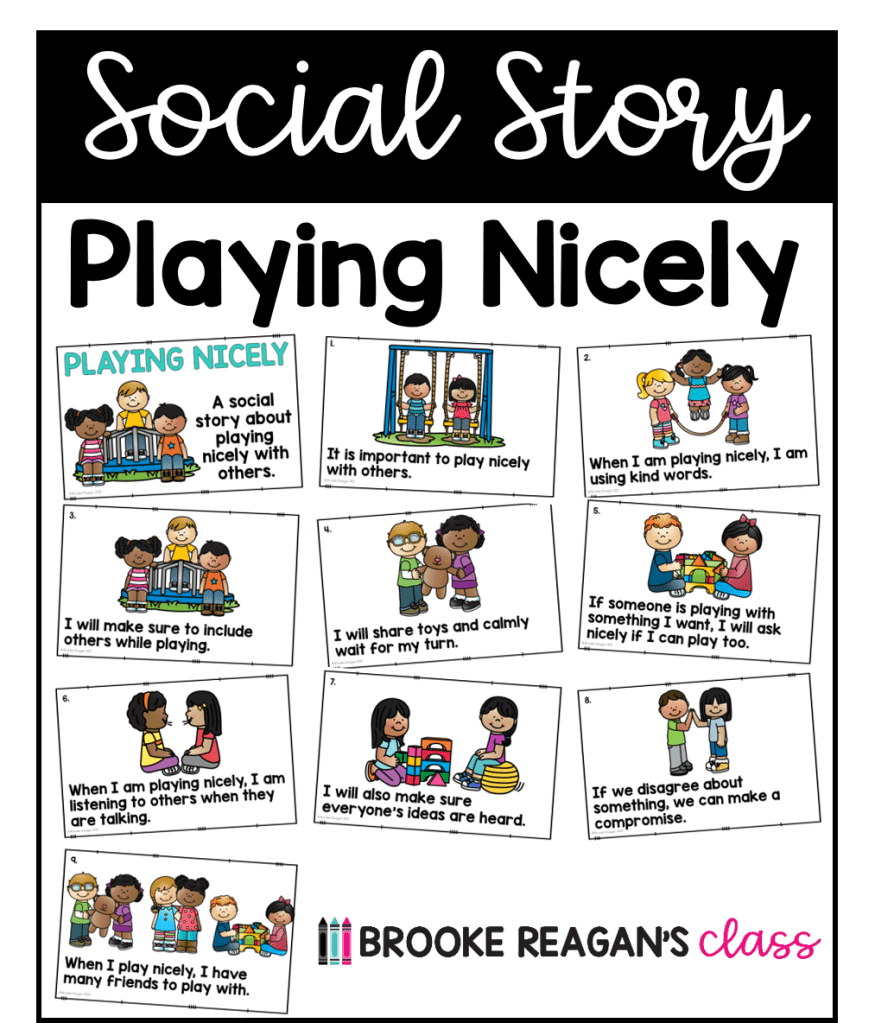
Social stories are a valuable tool for helping individuals living with Neurodiversity (Autism Spectrum Disorder ASD & Attention Deficit Hyperactivity Disorder ADHD navigate social situations. These personalised, narrative based tools explain social scenarios in simple, clear language, breaking down complex interactions into manageable steps. I have used them with great success for my son who has complex needs and is non-verbal. He responds very well to this approach as he likes visuals, particularly personalised photos for new experiences which are unfamiliar to him.

Why Social Stories Matter:

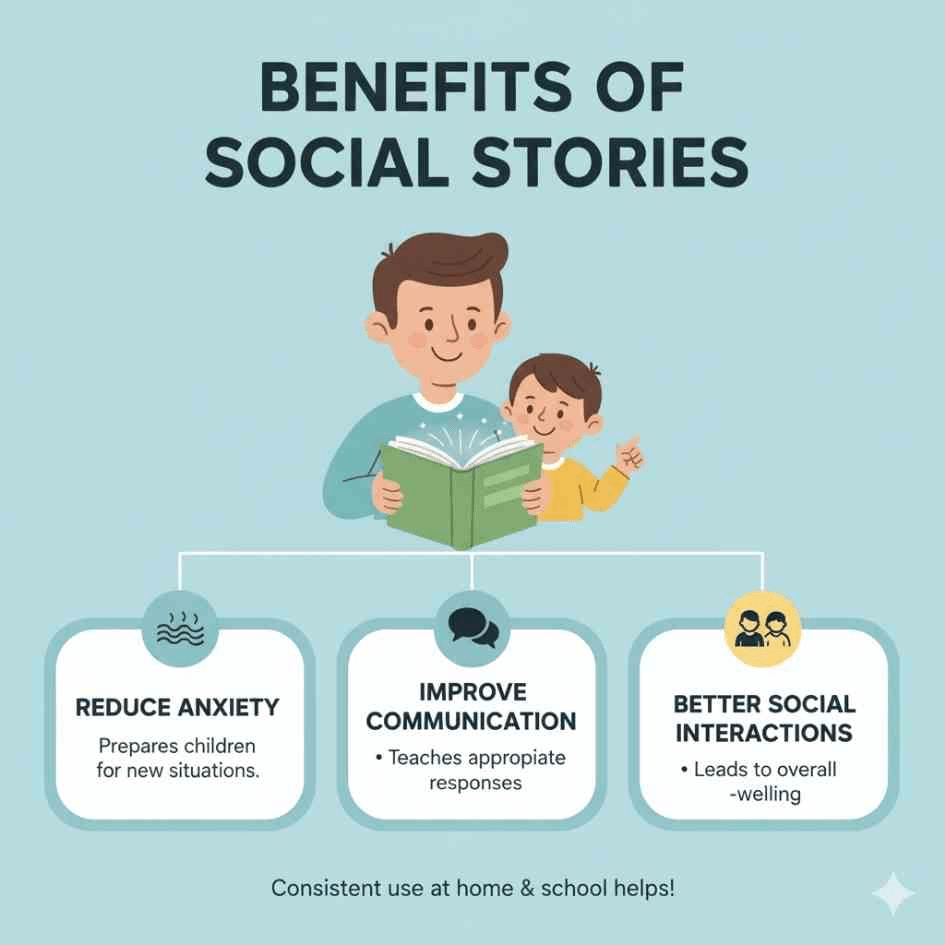
  1. Enhance Social Understanding: Social stories help individuals understand social norms, cues, and appropriate behaviours in various situations.
  2. Reduce Anxiety: They provide predictability and clarity, easing anxiety about new or unfamiliar events.
  3. Promote Independence: By offering guidance on how to handle different situations, social stories help individuals build life skills and manage social interactions with less support.
  4. Personalised Learning: Social stories can be tailored to fit the specific needs and challenges of the individual, making them highly adaptable.

How They’re Used:

  • In the Classroom: Teachers can use social stories to explain routines, expectations, and social interactions.
  • At Home: Parents can help children understand outings, everyday tasks and emotions.
  • In Therapy: Therapists use social stories to teach coping strategies and social communication skills.

By breaking down tricky or new social situations into clear, easy-to-follow steps, social stories help individuals feel more confident, reduce stress, and improve social engagement.

You can create a social story using any technology like Word or PowerPoint in the Microsoft Office Suite. There is also an app that you can use: https://apps.apple.com/us/app/social-story-creator-library/id588180598 I have found this app to be very easy to use and it’s easy to add your own photos and text to individualise the story.

School Refusal

Should we force a child to go to school?

In short, no. Working together with your child and addressing the reasons they don’t want to go to school should be the priority. It is important that they feel safe and that their well-being is important to you.

It is recommended that a dialogue is opened with the child. Questions should be asked so you can get to the core reason that school refusal is taking place.

Possible questions:

  • If you could change one thing about your school, what would it be? 
  • Is there anyone bothering you at school?
  • How can I help you with school?
  • Are you worried about anything at school? 
  • How are your friendships at school going? 
  • Is anything worrying you in general?
  • Is there anything you wish your teachers knew?
  • Is there anything you wish I knew?

Strategies for dealing with school refusal:

  • Stay calm – This leaves space for your child to come to you in a calm way themselves.
  • Use positive language – For example, instead of ‘are you going to get up and go to school today?’ try ‘what shall we do after school today?’.
  • Debrief daily – Open the lines of communication for your chid to share what might be bothering them.

School refusal can be very complex:

  • Get professional guidance – starting with school staff. Speak to the class teacher, school counsellor, student services so you can work together as a team to help your child overcome their anxiety.
  • Speak to your doctor/paediatrician and get the support of a psychologist or counsellor who may also help to unlock why your child is not attending school and help address the problem of getting them back to school with their well-being in mind.

Helping Special Needs Parents

Caring for a child with special needs is challenging. It can also be thankless, relentless and make parents feel invisible within their friendship groups and families.

The best way to support carers is by making them feel like they are not alone in their struggles. Joining groups that are designed with carers in mind is a good option. I am a big advocate of Carers SA, soon to become the Carer Gateway in April 2020. However, not everyone wants to be a part of a group situation, preferring 1-1 support and familiar people only.

It is important to provide carers with choices about the type of support they need. It might be a peer support group, 1-1 counselling, carer outings or simply family and friend gatherings in supportive environments.

Providing a safe environment for the carer and the person they are caring for will be greatly appreciated and may work to ease the social isolation that many carers feel in their role. Planning inclusive events may require a little extra effort but asking questions of the carer about what would make it a more successful event for them, will go a long way in helping them feel enjoyment and a sense of belonging.

Here are some other practical ways you can help special needs parents.

We Go Together

Finding and maintaining friendships can be difficult for many people but when you are a carer, it can feel impossible to find people who you truly connect with.

If you don’t have many friends, joining interest clubs such as a camera club, carer groups and activities, school events and online communities are some ways that you can find others who have similar interests as you.

Taking the time to build positive friendship connections increases your sense of well-being and gives you a wider world view. And by regularly talking to others, it can help reduce overall feelings of loneliness and isolation.

It is really important that when you find those connections with others that you take the time to nurture those people and share your highlights and lowlights equally. Make the time to listen to one another, have a laugh and support each other not only in the sad times but also in your endeavours and dreams.

People who are truly happy are out and about living life, enjoying their passions, doing good work and being good people. Chase your own passions and follow your own path. You will be amazed at who you find when your paths eventually cross. You will find those special people who ‘go together’ with you, who make you smile, who inspire you to do what you love and who believe in you, even when you struggle to believe in yourself.