Teaching Children with ASD and ADHD: What Actually Helps?

Supporting students with Autism Spectrum Disorder (ASD) and Attention-Deficit/Hyperactivity Disorder (ADHD) isn’t about doing more, it’s about doing things differently, intentionally, and consistently.

Here are some approaches that can truly make a difference in the classroom:

1. Relationship First and Always
Before any strategy works, connection comes first.

Students with ASD and ADHD often experience school as a place where they are misunderstood or ‘getting it wrong’. When a teacher takes time to build trust, learning interests, noticing strengths, being genuinely warm, it changes everything.

  • Greet them by name
  • Show interest in what they love
  • Be a safe, predictable adult

Connection reduces anxiety and anxious brains don’t learn well.

2. Patience is Not Passive

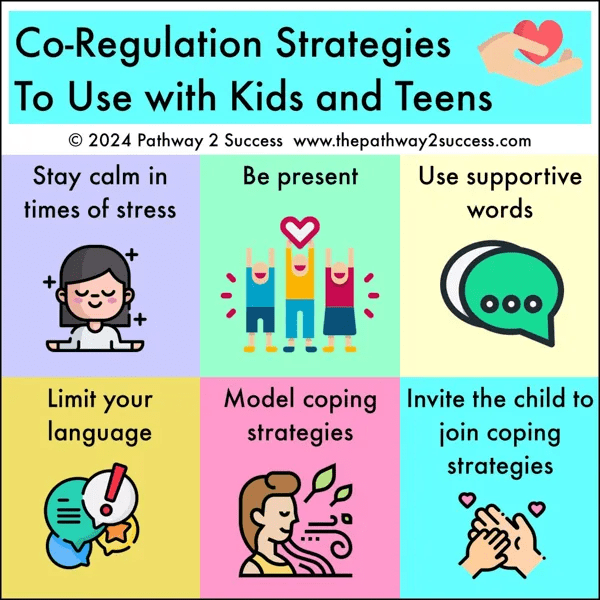
Patience isn’t ‘waiting it out’, it’s actively supporting regulation.

Processing time may be slower. Transitions can feel overwhelming. Emotional responses may be bigger or faster.

  • Allow extra time to respond
  • Avoid rushing or repeated demands
  • Stay calm when they are not

Your regulation becomes their regulation.
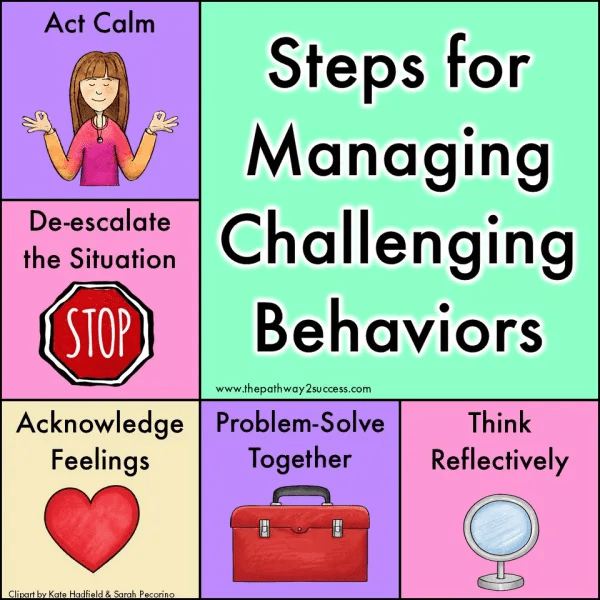
3. Clear, Simple, Predictable Instructions

Many students with ASD/ADHD struggle with working memory and processing.

  • Give one / two instructions at a time
  • Use clear, concrete language
  • Pair verbal instructions with visuals where possible

Instead of: ‘Get ready for your next task
Try: ‘Pack your book away, then line up at the door

4. 1:1 Support (Even in Small Moments)

Not every child will have formal support, but small moments of individual attention matter.

  • Check in quietly at their desk or invite them to work with you
  • Pre-teach instructions before whole-class tasks
  • Revisit instructions and learning during the lesson

These micro-moments can prevent overwhelm and build confidence.

5. Catch Them Getting It Right

Students with ASD and ADHD often hear more correction than encouragement.

Make praise specific and immediate:

  • ‘I noticed you started your work straight away, that’s fantastic’.
  • ‘You worked really hard on that even when it was tricky, well done’.

This builds motivation, self-esteem, and willingness to try.

6. Support Regulation, Not Just Behaviour

Behaviour is communication.
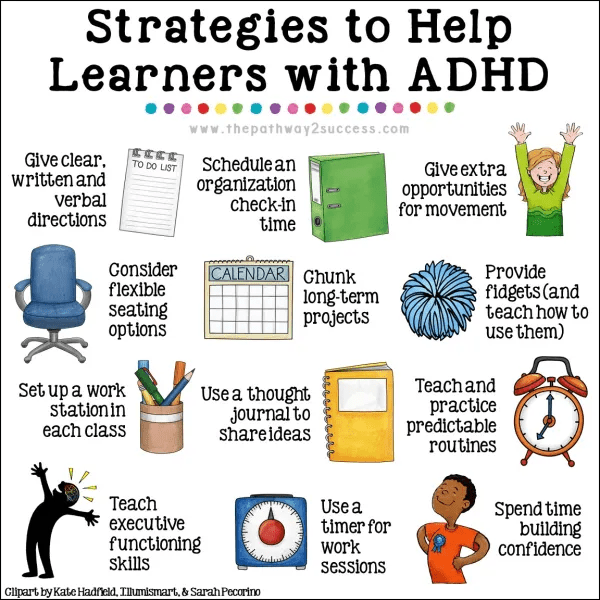
Instead of asking, ‘How do I stop this’?
Ask yourself, ‘What is this student telling me’?

  • Provide movement breaks
  • Offer quiet spaces
  • Use sensory tools where appropriate
  • Allow flexibility when overwhelmed

A regulated student can access learning. A disregulated one cannot.

7. Flexibility Over Compliance

Rigid expectations can create unnecessary stress.

  • Offer choices where possible
  • Adjust workload if needed
  • Be flexible with how work is completed

Fair doesn’t always mean equal, it means giving each student what they need to succeed.

8. Structure Creates Safety

Predictability reduces anxiety.

  • Use visual schedules
  • Prepare students for changes in routine
  • Give countdowns before transitions

Even small warnings like ‘5 minutes until we pack up’ can prevent distress.

9. Work With, Not Against

Collaboration is key.

  • Speak with parents/carers
  • Consult with allied health professionals
  • Share strategies across settings

Consistency across environments helps students feel secure and understood.
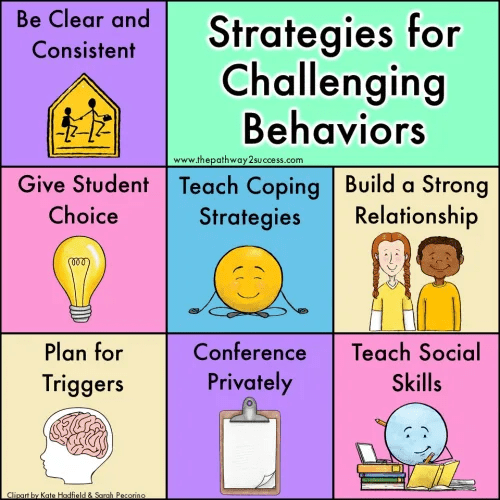
10. See the Child, Not Just the Diagnosis

Every child with ASD or ADHD is different.

  • Focus on strengths and interests
  • Avoid assumptions
  • Stay curious

These students often bring creativity, deep focus on passions, honesty, and unique perspectives to the classroom.

Final Musings

Supporting students with ASD and ADHD isn’t about having all the answers, it’s about intentional kindness, consistency, and understanding.

When students feel safe, seen, and supported, learning follows. And remember that this applies to all students, diagnosed or not.
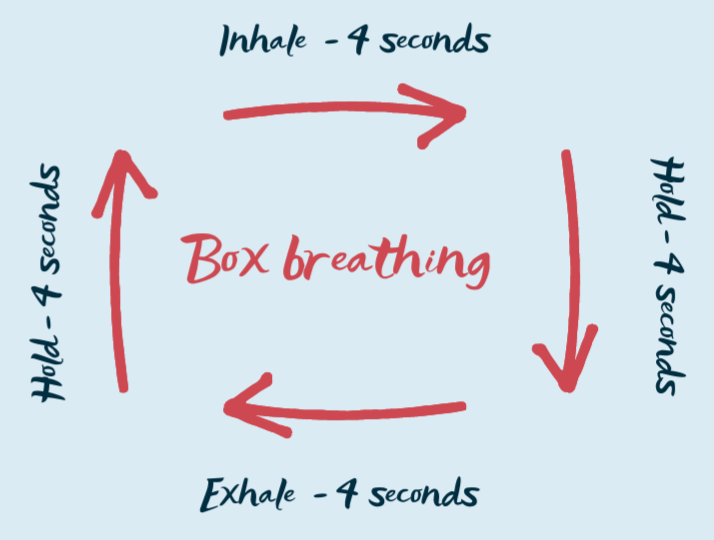
Anxiety Strategies – Box Breathing

Box breathing is a simple breathing technique that helps calm the nervous system and reduce anxiety. By slowly inhaling, holding, exhaling, and holding again for equal counts, it activates the body’s relaxation response and helps shift us out of “fight or flight” mode.

This steady rhythm can lower heart rate, reduce muscle tension, and create a sense of control during overwhelming moments. For people experiencing anxiety, box breathing provides a practical tool to slow racing thoughts, improve focus, and bring the body and mind back to a more balanced, grounded state.

Here are the simple steps for box breathing:

  1. Inhale slowly through your nose for a count of 4.
  2. Hold your breath for a count of 4.
  3. Exhale slowly through your mouth for a count of 4.
  4. Hold again (with lungs empty) for a count of 4.

Repeat this cycle for 4–6 rounds, or longer if needed. Keep the breath slow, steady, and gentle rather than forced. If helpful, imagine tracing the four sides of a square as you breathe.

There are many videos on YouTube that you can follow to get the right rhythm. Some can guide you verbally like in my first example and others, like in my second example, you will just hear the breath sounds to guide you. Experiment until you find the right guide for you.

Anxiety Strategies & Techniques – (3-3-3)

I will be writing a series about some simple techniques which could help children and adults with triggered anxiety to help manage their symptoms. (Please note that severe anxiety which is impacting significantly on a person’s life may need the intervention of medical professionals and trained therapists).

The 3-3-3 technique is a wonderful tool to use with children as it is easy for them to remember. The objective is for them to feel more mindful, focused and grounded when their anxiety is starting to feel overwhelming.

3-3-3 involves the person identifying 3 objects around them they can see, 3 things that they can hear and moving 3 body parts (ie their fingers, wrists and toes). It works to reconnect the person with their physical surroundings and become aware of their body movements instead of their symptoms of anxiety like intrusive thoughts. Some steps from Choosing Therapy:

Step 1: Focus on 3 Objects You Can See

Focusing on things that you can see helps you become visually aware of your surroundings. You can notice big objects such as a tree or a chair, or you can look for smaller, more discreet objects such as a pencil or a coin. The idea isn’t necessarily to have objects in mind that you want to see, but rather to focus on the world around you. This helps you deal with your anxiety by removing you from the mental chatter causing you stress.

Step 2: Focus on 3 Things You Can Hear

Pinpointing sounds is another great way to help you deal with anxiety. Diverting your attention to your environment can help you transition from a state of inward thinking to one in which you’re connected to your surroundings instead. However, depending on your location, you may have a hard time isolating sounds. Some things to listen for include a clock ticking, clacking of keys on a keyboard, or someone sniffling. If you are somewhere outdoors, you may notice leaves rustling in the wind, cars passing by, or dogs barking.

Step 3: Focus on 3 Things You Can Touch/Move

Lastly, find three things that you can touch or move. These can be within your reach or even parts of your body. Identifying tangible items is one of the fastest ways to ground yourself when you’re feeling anxious. Teaching yourself to focus on the physical environment helps you feel anchored and reminds you to be present.

School Holiday Survival Guide

As the summer holidays approach, this time can be a cause of anxiety for children who are out of routine for 8 weeks as well as their parents and caregivers who may struggle to find things to do.

When you have the added stress of having a child with a disability, activities which other children and their families find fun could have the complete opposite affect due to extra crowd numbers and noise.

Every child is different, so finding the right activity is important. Here are some Adelaide (and surrounds) based activities to consider:

AT HOME

  • Arts and Craft – craft activities, painting, drawing, stickers, chalk
  • Water Play – buckets, cups, boats, balls, paintbrushes
  • Build a Castle – pillows, chairs, table, sheets
  • Create a Reading/Play Nook – move furniture, blankets, pillows, books
  • Sensory Play – shaving foam, play-doh, floof, slime, magnetic sand
  • Gross Motor Play – trampoline, fitball, musical instruments
  • Cooking

FREE COMMUNITY ACTIVITIES

PAID COMMUNITY ACTIVITIES

Helping Special Needs Parents

Caring for a child with special needs is challenging. It can also be thankless, relentless and make parents feel invisible within their friendship groups and families.

The best way to support carers is by making them feel like they are not alone in their struggles. Joining groups that are designed with carers in mind is a good option. I am a big advocate of Carers SA, soon to become the Carer Gateway in April 2020. However, not everyone wants to be a part of a group situation, preferring 1-1 support and familiar people only.

It is important to provide carers with choices about the type of support they need. It might be a peer support group, 1-1 counselling, carer outings or simply family and friend gatherings in supportive environments.

Providing a safe environment for the carer and the person they are caring for will be greatly appreciated and may work to ease the social isolation that many carers feel in their role. Planning inclusive events may require a little extra effort but asking questions of the carer about what would make it a more successful event for them, will go a long way in helping them feel enjoyment and a sense of belonging.

Here are some other practical ways you can help special needs parents.

Music

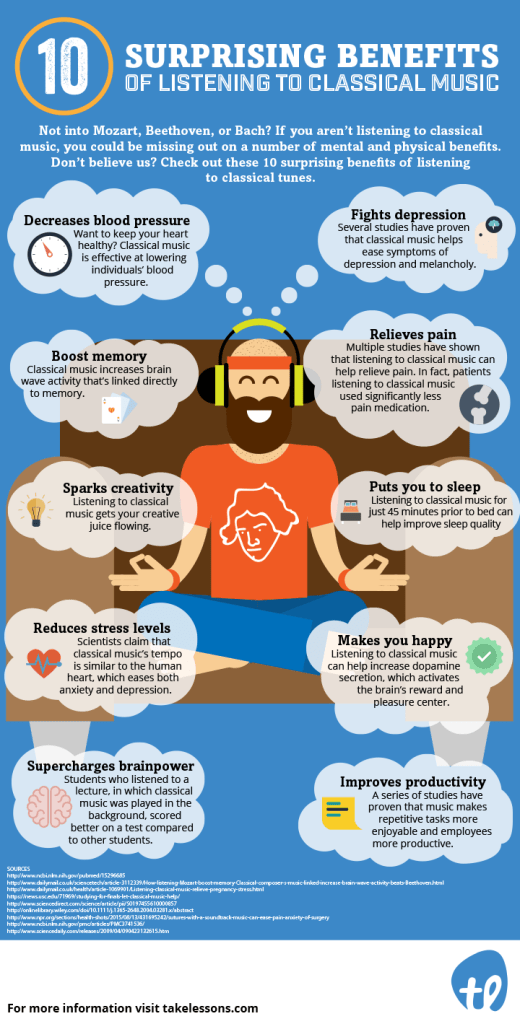
Listening and playing music has many benefits for our wellbeing, physical health and emotional regulation. It can keep us feeling happy, motivated and ease symptoms of depression.

While the above graphic references classical music, there is power in all types of music if it is enjoyed. Teenagers and small children are often drawn to and enjoy listening to music through YouTube, television, movies and gaming. And while the mode of sharing music is mostly digital or online in the modern world, it is possible to access the classics from previous generations if this is what you enjoy.

It is important to find music that you enjoy and a good place to find new music is to look on the current charts, take note of music you hear in the shows you like and look up songs and albums written and performed by the same artists. You can do this for free on platforms such as YouTube and Spotify. Add some headphones (noise cancelling if you want to remove environmental noise distractions), get listening and enjoy the benefits.

Be Grateful For What You Have

A short video powerfully depicting the importance of being grateful and mindful for what you have in life.

A little thing you can do to practice gratefulness is to keep a journal and write a point or two each day about the things you were grateful for. It could be as simple as a chat with a friend that made you feel special, a goodnight kiss from your child or a delicious cup of coffee that you didn’t have to make yourself. You will be surprised at how many beautiful moments we overlook each day. Take the time to remember and cherish them. If you wrote 2 each day, there would be 730 happy memories to be grateful for and mindful of each year.

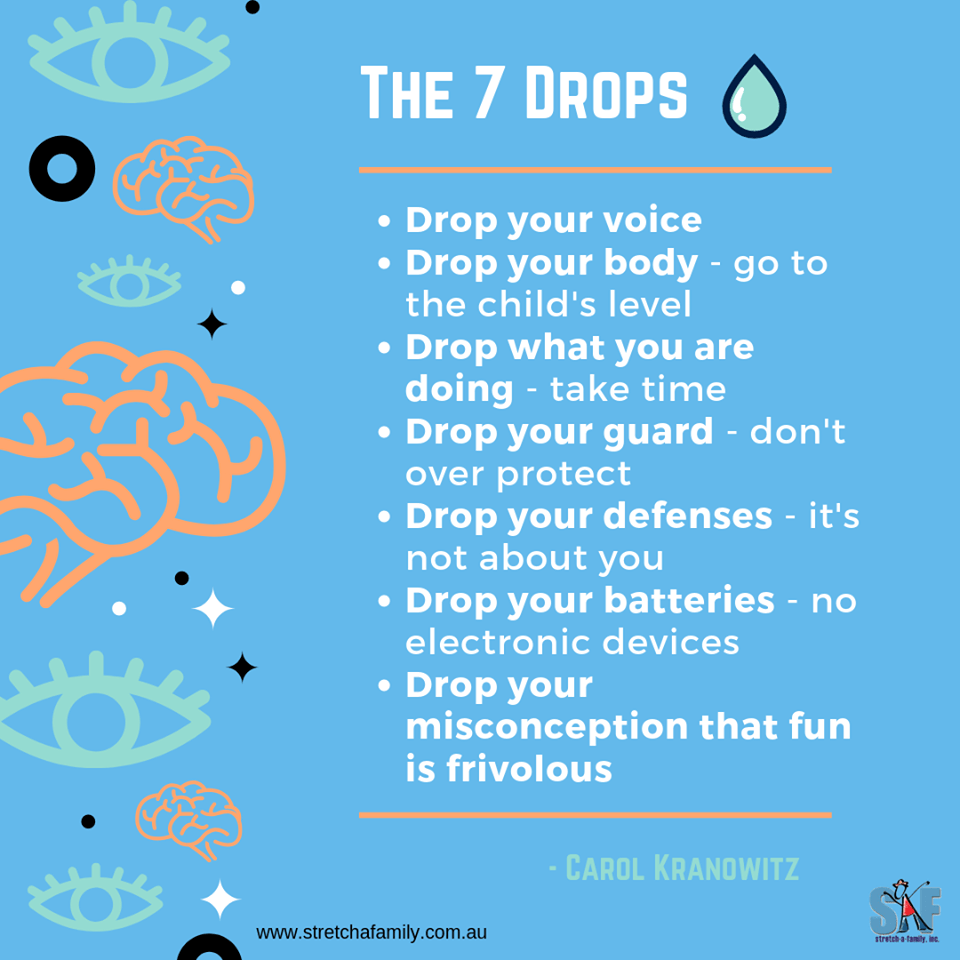
The 7 Drops

Working with children can be a challenge, especially if they are not keen to work with you in return. This list outlining ‘The 7 Drops’ is something all practitioners and educators can try to aid building connections and relationships with the children they work with.

Drop your voice – lower your pitch. Show interest in what the child is doing with your voice, your facial expressions and body language.

Drop your body – get down to their level. If they are on the floor playing, ask to join in on what they are doing. Initiate taking turns if they will accept it.

Drop what you are doing – take your time to get to know them. Leave note-taking and other work for later, make spending time with them your priority.

Drop your guard – let them take risks. Encourage them to try different things and get messy and creative while doing it.

Drop your defences – keep your agenda to yourself. This is about the child’s development. Building a real connection and relationship needs to come from an authentic place. Set goals with the child so you are working towards the same outcomes.

Drop your batteries – turn your devices to silent and give them your full attention. This creates less distraction for you and good role-modelling for them.

Drop your misconception that fun is frivolous – learning through play is powerful. Rediscover your inner child and follow their lead. Have fun!

We Go Together

Finding and maintaining friendships can be difficult for many people but when you are a carer, it can feel impossible to find people who you truly connect with.

If you don’t have many friends, joining interest clubs such as a camera club, carer groups and activities, school events and online communities are some ways that you can find others who have similar interests as you.

Taking the time to build positive friendship connections increases your sense of well-being and gives you a wider world view. And by regularly talking to others, it can help reduce overall feelings of loneliness and isolation.

It is really important that when you find those connections with others that you take the time to nurture those people and share your highlights and lowlights equally. Make the time to listen to one another, have a laugh and support each other not only in the sad times but also in your endeavours and dreams.

People who are truly happy are out and about living life, enjoying their passions, doing good work and being good people. Chase your own passions and follow your own path. You will be amazed at who you find when your paths eventually cross. You will find those special people who ‘go together’ with you, who make you smile, who inspire you to do what you love and who believe in you, even when you struggle to believe in yourself.